
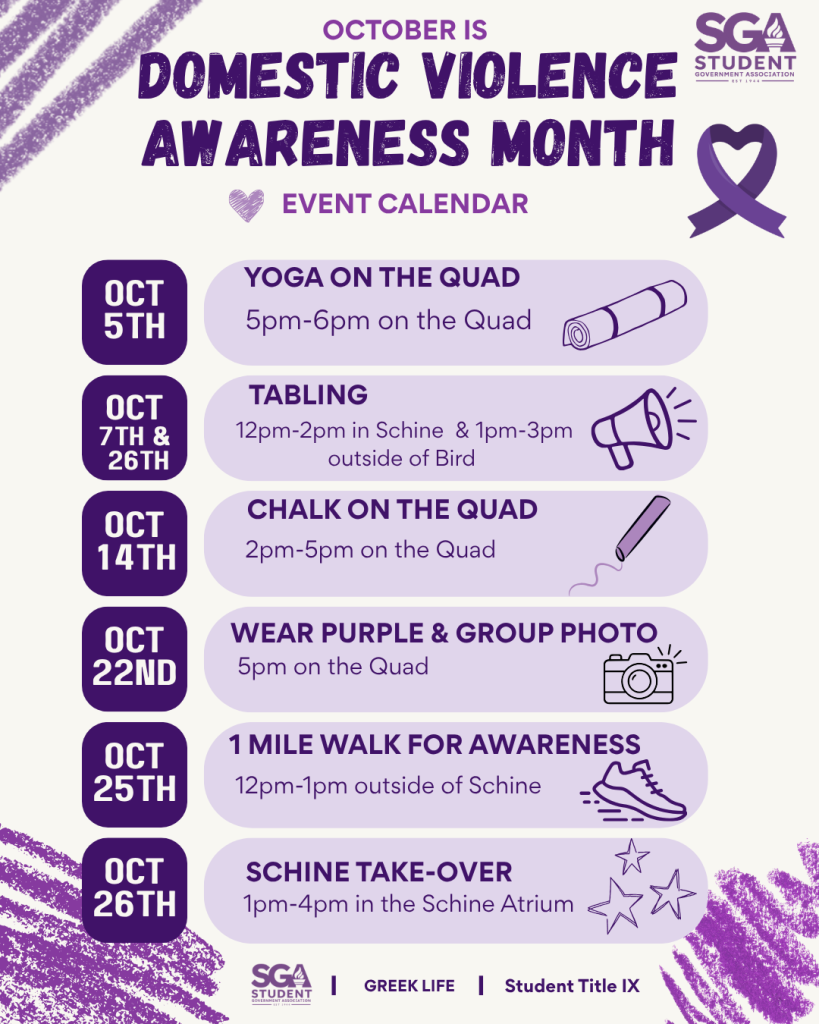
Bring your duck over to Student Title IX Case Management in Marley Education Center 242 to receive a mug!
We have large and small mugs available for trade-in, and they’re all microwave and dishwasher-safe!
Supplies are limited, so bring your duck as soon as you can.
Includes the Sexual and Relationship Violence Response Team
Website: Barnes Center at The Arch, Counseling
Contact: 315.443.8000 (24/7)
Location: 150 Sims Drive, Suite 302
Services provided: Mental health services, including individual counseling, group counseling and support.
Website: Barnes Center at The Arch, Healthcare
Contact: 315.443.8000 (24/7)
Location: 150 Sims Drive, Suite 201
Services provided: Healthcare services such as physical examinations, STI testing, emergency contraceptives and other healthcare needs.
Website: Hendricks Chapel
Contact: 315.443.2901 or chapel@syr.edu (Please do not email confidential information).
If you would like to speak with a chaplain, visit the Hendricks Chapel Faith Communities and Weekly Services page to get specific contact information for any of the ten chaplaincies.
Location: Hendricks Chapel
Services provided: Faith-based counseling and grief resources.
Confidential Resource for Staff, Faculty and Graduate Students only.
Website: University Ombuds
Contact: 315.443.1087 or ombuds@syr.edu
Location: 111 Waverly Ave, Suite 215
Services provided: Please visit the University Ombuds Services page for more information about their services.
Website: Community Standards
Contact: 315.443.3728 or online contact form
Location: 804 University Ave, Suite 106
Services provided: Oversees sexual and relationship violence conduct processes, manage community wellness requirement holds, training university conduct officers.
Website: Equal Opportunity, Inclusion, & Resolution Services
Contact: 315.443.4018 or equalopp@syr.edu
Location: 621 Skytop Rd, Suite 1001
Services provided: Oversees and investigates harassment, discrimination, and bias complaints. Also manages sexual and relationship violence and sexual misconduct training and educational workshops. They also handle informal or formal reporting and the investigation of Title IX violation claims involving Syracuse University staff and/or faculty.
Website: Student Outreach and Support
Contact: 315.443.4357(HELP) or studentsupport@syr.edu
Location: 111 Waverly Ave, Suite 220
Services provided: Case management in relation to support services, procedural advisement.
Website: Barnes Center at The Arch, Health Promotion
Contact: 315.443.7273 or healthpromotion@syr.edu
Location: 150 Sims Drive, Suite 104
Services provided: Oversees the community wellness requirements for new and returning students and offers educational workshops.
Website: Syracuse Police Department
Contact: 315.442.5200 or 911 for emergencies
Location: 511 S. State St, Syracuse, NY 13202
Website: Vera House
Contact: 315.425.0818 or their 24-hour support line at 315.468.3260
Location: 723 James St, Syracuse, NY 13203
Services provided: A 24-hour crisis, support, and information hotline, emergency shelter for individuals at threat of violence, advocacy and counseling services for victims of sexual and relationship violence, and community education and training on domestic and sexual violence.
The health and safety of every student at Syracuse University is of utmost importance. Syracuse University recognizes that students who have been drinking and/or using drugs (whether such use is voluntary or involuntary) at the time that violence, including but not limited to, Sexual Assault, Domestic or Dating Violence, Stalking, or other forms of Prohibited Conduct occurs may be hesitant to report such incidents due to fear of potential consequences of their own conduct. Syracuse University strongly encourages students to report all forms of Prohibited Conduct to institution officials. A bystander acting in good faith or a reporting individual acting in good faith that discloses any incident of Prohibited Conduct to Syracuse University’s officials or law enforcement will not be subject to Syracuse University’s Student Conduct Code for violations of alcohol and/or drug use policies occurring at or near the time of the commission of the reported incident of Prohibited Conduct.
The University prohibits Retaliation under this policy. Retaliation means to intimidate, threaten, coerce, or discriminate against any individual for the purpose of interfering with any right or privilege secured by Title IX or this policy, or because the individual has made a report or complaint, testified, assisted, or participated or refused to participate in any manner in an investigation, proceeding, or hearing under this part. Intimidation, threats, coercion, or discrimination, including charges against an individual for conduct violations that do not involve sex discrimination or sexual harassment, but arise out of the same facts or circumstances as a report or complaint of sex discrimination, or a report or formal complaint of sexual harassment, for the purpose of interfering with any right or privilege secured by Title IX or this policy, constitutes Retaliation.
Under New York’s Enough is Enough sexual misconduct prevention law, all student Complainants and Respondents in cases involving sexual harassment or assault have the right to:
• Make a report to local law enforcement and/or state police;
• Have disclosures of Dating or Domestic Violence, Stalking, Sexual Assault, and other forms of Sexual Harassment treated seriously;
• Make a decision about whether or not to disclose a crime or violation and participate in the judicial or conduct process and/or criminal justice process free from pressure by the institution;
• Participate in a process that is fair, impartial, and provides adequate notice and a meaningful opportunity to be heard;
• Be treated with dignity and to receive from the institution courteous, fair, and respectful health care and counseling services, where available;
• Be free from any suggestion that the reporting individual is at fault when these crimes and violations are committed, or should have acted in a different manner to avoid such crimes or violations;
• Describe the incident to as few institution representatives as practicable and not be required to unnecessarily repeat a description of the incident;
• Be protected from retaliation by the institution, any student, the Complainant and/or the Respondent, and/or their friends, family, and acquaintances within the jurisdiction of the institution;
• Access to at least one level of appeal of a determination;
• Be accompanied by an advisor of choice who may assist and advise a reporting individual, accused, or Respondent throughout the judicial or conduct process including during all meetings and hearings related to such process; and
• Exercise civil rights and practice of religion without interference by the investigative, criminal justice, or judicial or conduct process of the institution.
1.1 Syracuse University is an institution of higher learning where individual growth and development are fostered, excellence is pursued, and the highest standards of integrity are expected in all areas of life. Syracuse University is committed to providing an environment where persons are safe, property is secure, individual rights of all persons are respected, and education of the highest quality is achieved.
1.2 Oversight of Student Title IX Case Management and the Student Conduct System has been delegated to the Senior Vice President for the Student Experience. Implementation of these procedures is the responsibility of Student Title IX Case Management and Community Standards. The Student Conduct Code outlines the behavior that is expected of all students at Syracuse University. Having voluntarily enrolled at Syracuse University, all students have entered into an agreement to abide by the rules and regulations set forth in the Student Conduct Code and other University policies. The procedures outlined in this handbook apply to the resolution of alleged misconduct in violation of the Sexual Harassment Abuse and Assault Prevention Policy and Student Conduct Code or other University policies, as well as any related matters. Academic integrity cases are handled through a separate process administered by the Academic Integrity Office. Each student is responsible for conforming their conduct to the requirements of the Student Conduct Code and applicable federal, state, and local laws.
1.3 Syracuse University considers its Student Conduct Code as a statement of minimal expectations and seeks to foster a commitment to the highest standards of ethical behavior by the coherent, consistent, and fairway it enforces its rules and regulations. The University views its student conduct process as a learning experience that is intended to result in personal growth, empathy, and understanding.
1.4 Time frames mentioned in these procedures are estimates only. Investigations and conduct cases and specific components of cases may take shorter or longer depending on various factors, including but not limited to, the nature and complexity of the case; availability of parties and witnesses; time of year; numbers of parties; etc.
2.1 The Student Conduct System has jurisdiction over complaints against students alleging sex discrimination, including sexual and gender-based harassment, assault, and violence. The Syracuse University Sexual Harassment, Abuse, and Assault Prevention Policy applies to all University programs and activities, and the conduct procedures for cases of sexual harassment are available on the University policies website.
2.2 University student conduct proceedings are administrative in nature and independent of any criminal and/or civil legal proceedings, even when those proceedings are concurrently in process. Student conduct proceedings use the Preponderance of the Evidence, or “More Likely Than Not” standard of proof, and are intended to enforce the Student Conduct Code and other University policies at Syracuse University. The University may notify local and federal authorities when a crime is alleged to have been committed. The legal rules of evidence do not apply in the University conduct process.
Syracuse University (“University”) is committed to providing a prompt and equitable response to reports of Prohibited Conduct under the Syracuse Sexual Harassment, Abuse, and Assault Prevention Policy (the “Policy”).32 These procedures apply to the conduct of students who are enrolled or have applied for admission in the University.
These procedures encompass Prohibited Conduct that occurs: 1) within the University’s Education Program or Activity within the United States; 2) outside the United States, but still in an Education Program or Activity; and, 3) under certain circumstances outside of the Education Program or Activity but within the scope of conduct regulated by the University. The intake, investigative, hearing and appeal process are the same for all forms of Prohibited Conduct. The informal and formal resolution processes outlined in these procedures follow the final Title IX regulations issued by the U.S. Department of Education’s Office for Civil Rights in May 2020.
Any person may make a report of Prohibited Conduct to the Title IX Coordinator or an appropriate designee (in any particular case, the Title IX Coordinator may delegate their authority to another appropriate University representative). The University will treat Complainants and Respondents equitably by offering Supportive Measures to a Complainant, and by following a resolution process that complies with the Title IX regulations before the imposition of any disciplinary sanction against a Respondent.
Upon receipt of a report of Prohibited Conduct, the matter may be resolved through:
All time frames mentioned throughout these processes are approximate and may be extended for good cause with written notice to the parties. Good cause may include considerations such as the absence of a party or witness; concurrent law enforcement activity or criminal proceedings; the need for language assistance or accommodation of disabilities; or other considerations that impact the timing of the investigation, hearing or appeal.
To make a report or file a Formal Complaint against a University student alleging Prohibited Conduct under the University’s Sexual Harassment, Abuse, and Assault Prevention Policy, an individual should contact the University’s Title IX Coordinator at 315.443.0211, Marley Education Center 242, or titleix@syr.edu. Confidential Resources are also available as described in the Policy.
To file a criminal complaint, an individual should contact the Department of Public Safety at 315.443.2224 or 005 Sims Hall, or contact the Syracuse Police Department at 911 (in an emergency) or 315.435.3016.
The University responds to reports of Prohibited Conduct discreetly and attempts to maintain privacy throughout the investigatory process, to the extent practicable and appropriate under the circumstances. However, in order to conduct an investigation, it is generally necessary to discuss the allegations with the person(s) responding to the allegations and other witnesses. Additionally, the University may have legal obligations to disclose information to law enforcement or in the context of legal proceedings.
The term “Complainant” refers to an individual who is reported to have experienced Prohibited Conduct, regardless of whether the individual makes a report or seeks disciplinary action. Although the University reserves the right to initiate a Formal Complaint under this process, the term "Complainant" refers to the individual who is reported the have experienced the Prohibited Conduct. The University reserves the right to act as the Complainant and initiate a Formal Complaint under this process. The term “Respondent” refers to an individual who has been accused of Prohibited Conduct. An individual may make a report to the University, to law enforcement, to neither, or to both. In particular, a Complainant has the right to report, or decline to report, potential criminal conduct to law enforcement.
If a Complainant also chooses to file a criminal report with law enforcement, the University will not unduly delay its investigation unless requested to do so by the appropriate legal authorities. The University will comply with law enforcement agency requests for cooperation. This may require the University to temporarily suspend the fact-finding portion of an investigation while the law enforcement agency gathers evidence. The University will promptly resume its investigation as soon as notified by the law enforcement agency that it has completed the evidence gathering process. The University may be required to proceed with an investigation or hearing prior to resolution of an associated criminal matter.
Upon receipt of a report of potential Prohibited Conduct from a Complainant, Responsible Employee, or other individual, the Title IX Coordinator (or designee) will promptly – typically within 48 hours – contact the reporting individual to request a meeting to gather supplemental information (if any) and explain the University’s processes. If the reporting individual is a potential Complainant (the individual who is reported to have experienced the Prohibited Conduct), the outreach will cover reasonably available Supportive Measures (available with or without filing a Formal Complaint); the process for filing a Formal Complaint; the Complainant’s right to report the alleged conduct to law enforcement (either on campus or off); the difference between privacy and confidentiality; and the right to be protected from Retaliation.
In addition to the initial conversation and any subsequent meetings with the Complainant, the University will provide the Complainant with written information about resources, procedural options, including local law enforcement resources as applicable, and reasonably available Supportive Measures. This written information will include a notification about the process for seeking disability-based accommodations, academic adjustments, and/or auxiliary aids under Section 504 of the Rehabilitation Act and/or the Americans with Disabilities Act.
As part of the Intake and Outreach, the Title IX Coordinator (or designee) will:
Upon receipt of a report of Prohibited Conduct, regardless of whether a Complainant chooses to pursue a Formal Complaint, the Title IX Coordinator (or designee) will provide Supportive Measures, as reasonable, available, and appropriate. Respondents are also eligible for Supportive Measures as reasonable, available, and appropriate. Supportive Measures are non-disciplinary, non-punitive individualized services offered as appropriate, as reasonably available, and without fee or charge to a Complainant or Respondent, before or after the filing of a Formal Complaint or where no Formal Complaint has been filed. Such measures are designed to restore or preserve equal access to the University’s Education Program or Activity without unreasonably burdening the other party, including measures designed to protect the safety of all parties or the campus community, or deter Prohibited Conduct. Supportive Measures may include counseling, extensions of deadlines or other course-related adjustments, modifications of work or class schedules, campus escort services, mutual restrictions on contact between the parties (also known as No Contact Orders), changes in work or housing locations, leaves of absence, increased security and monitoring of certain areas of the campus, and other similar measures. Additional relief such as protective orders may be available through the criminal and/or family court process. Individuals may contact the Sexual and Relationship Violence Response Team (24/7) at 315.443.8000 or the Title IX Coordinator at 315.443.0211 or TitleIX@syr.edu to discuss or request Supportive Measures.
The University will maintain as confidential any Supportive Measures provided to a Complainant or Respondent, to the extent that maintaining such confidentiality would not impair the ability of the University to provide the Supportive Measures. Complainants and Respondents will, upon request and consistent with these procedures and the Student Conduct System Handbook, be afforded a prompt review, reasonable under the circumstances, of the need for and terms of any Supportive Measures that directly affect them, and shall be allowed to submit evidence in support of their request. For example, students may request rescission of a No Contact Order per Part 4 of the Student Conduct System Handbook. Complainants and Respondents should request further review of other Supportive Measures—either the granting or denial of such measures—by contacting the Dean of Students’ Office. The Title IX Coordinator (or designee) will document each report or request for assistance, including requests for Supportive Measures, as well as the response to any such report or request. For more information on No Contact Orders, Interim Suspensions or other Administrative Actions, please see the Student Conduct System Handbook.
Based on the initial reported facts, the Title IX Coordinator (or designee) will determine whether to refer the incident to the University’s Threat Assessment Management Team (“TAMT”) to evaluate whether an emergency removal is required. If referred, the TAMT may conduct an individualized safety and risk analysis to determine whether the Respondent poses an immediate threat to the physical health or safety of any student or other individual arising from the alleged conduct. If the TAMT determines the Respondent poses an immediate threat to the physical health or safety of any individual, the TAMT may recommend emergency removal (also referred to as interim suspension) according to the process set forth at Part 4 of the Student Conduct System Handbook. Students can challenge interim suspensions under that same process.
Upon receipt of a report of Prohibited Conduct, the Title IX Coordinator (or a designee) will conduct a preliminary inquiry of the facts to determine whether the University must take any other actions, beyond those described in the outreach and Supportive Measures sections above, including whether the Title IX Coordinator (or designee) must initiate a Formal Complaint and investigation. The Title IX Coordinator (or designee) will first determine whether the reported conduct falls within the scope and jurisdiction of the Sexual Harassment, Abuse, and Assault Prevention Policy, and more specifically, within the jurisdiction of the Title IX regulations.
Based on reasonably available information at the time of intake, the Title IX Coordinator’s (or designee’s) inquiry will include assessing whether:
The Title IX Coordinator (or designee) will provide written notice to the Complainant summarizing their conclusions from the preliminary inquiry and outlining next steps in the process.
The formal resolution process (investigation, hearing and appeal process) is initiated by the filing of a Formal Complaint. A Formal Complaint is a document submitted to the Title IX Coordinator by the Complainant alleging that a Respondent engaged in Prohibited Conduct and requesting an investigation. The Formal Complaint may be submitted to the Title IX Coordinator in person, by mail, or by electronic mail, using the Title IX Formal Complaint form. The Complainant may also contact the Title IX Coordinator at TitleIX@syr.edu directly for assistance. The Title IX Coordinator also has the discretion to file a Formal Complaint on behalf of a Complainant or the University.
The University endeavors to respect the wishes of a Complainant to not pursue a Formal Complaint, to not be identified and/or to not participate in the process. Where possible, the University attempts to address complaints in accordance with the Complainant’s wishes.
However, the University may not always be able to do so, and may be limited in its ability to address incidents of Prohibited Conduct without full participation by a Complainant.
In evaluating the appropriate manner of resolution, including whether the Title IX Coordinator will file a Formal Complaint in the absence of a Formal Complaint by the Complainant, the Title IX Coordinator, in consultation with subject-matter experts as needed, will consider the following factors:
In order to protect the community, the University may be obligated to investigate and adjudicate serious incidents even when the Complainant would prefer otherwise. A Complainant may withdraw a Formal Complaint at any time, but the University may be compelled to continue the associated investigation or conduct process. The University reserves the right to take action in response to any incident that comes to its attention. The assessment of whether a Formal Complaint must be initiated will typically be concluded within fifteen (15) business days.
The University may consolidate Formal Complaints against more than one Respondent, or by more than one Complainant against one or more Respondents, or by one party against the other party, where the allegations of Prohibited Conduct arise out of the same facts or circumstances.
The Title IX Coordinator (or designee) will determine whether the conduct alleged in the Formal Complaint falls within the scope of the policy and the definition of Prohibited Conduct. The Title IX regulations require the Title IX Coordinator (or designee) to notify the parties in writing that the University is dismissing some or all of the allegations in the Formal Complaint related to Title IX Sexual Harassment as defined by the Title IX regulations if:
However, where the allegations in the Formal Complaint include other forms of Prohibited Conduct, the conduct occurs outside of the United States, or the conduct is not within the Education Program or Activity (but still within the scope of conduct regulated by the University), these procedures will still apply and the allegations may proceed to the formal resolution process set forth below. In addition to mandatory dismissal, the Title IX Coordinator (or designee) may dismiss the Formal Complaint or any allegations therein if:
The decision about whether to dismiss a Formal Complaint, in whole or in part, may be made at any time in the process and will be communicated to all parties in writing. Either party may appeal the decision to dismiss the Formal Complaint to the Director of the Office of Community Standards (or a designee).
Students participating in any University process for responding to a report or Formal Complaint of Prohibited Conduct may be advised by an advisor of their choice—including an attorney—throughout all phases of the process, including at interviews, other meetings, or hearings. Advisors have no standing in the process contemplated by these procedures, except to provide advice to their respective parties in a quiet, non-disruptive manner, and conduct questioning of other parties and witnesses at a hearing. Except for questioning during a hearing, advisors do not speak for their respective parties. Advisors must be respectful to parties, witnesses, and University administrators. Any advisor who fails to conform their behavior to these requirements or whose conduct interferes with the integrity and decorum of the process may be removed from the proceedings and barred from acting as an advisor in future University proceedings. In such circumstances the University will determine whether to proceed with the meeting or hearing at issue without the presence of the advisor. If a Complainant or Respondent does not have an advisor present at a live hearing (see the Formal Complaint process below for more information on live hearings), the University will provide an advisor free of charge to the party for the sole purpose of facilitating questioning on the party’s behalf of other parties and witnesses.
What follows in this sub-section is the process the University will use to respond to Formal Complaints of Prohibited Conduct lodged against students.
In general, the investigator has the discretion to determine the relevance and probative value of information proffered or received. Evidence is relevant if it makes a material fact more or less probable than it would be without the evidence.
The investigator may visit relevant sites or locations and record observations through written, photographic, or other means. In some cases, the investigator may consult medical, forensic, technological, or other experts when expertise on a topic is needed in order to achieve a fuller understanding of the issues under investigation.
The investigator will not require, allow, rely upon, or otherwise use questions or evidence that constitute, or seek disclosure of, information protected under a legally recognized privilege, unless the person holding such privilege has waived the privilege. If a person voluntarily chooses to share medical or counseling records with the investigator, they must sign a written consent that acknowledges that relevant information from the medical or counseling records must be shared with the other party to ensure the other party has notice of that information and an opportunity to respond.
If parties wish to provide expert testimony or evidence, they are solely responsible for securing attendance of any expert witness at a hearing, and for the costs or fees associated with any expert report or testimony.
The parties will be given an equal opportunity to present information and evidence to the investigator, and the University encourages them to provide all potentially relevant information, whether inculpatory or exculpatory. The University will not restrict the ability of either party to gather and present relevant evidence. That said, the burden of proof and evidence gathering rests with the University.
For parties or witnesses wishing to submit evidence to the investigator, they must submit all known evidence in existence and in their possession prior to completion of investigation report. If a party or witness fails to provide known evidence in their possession during the investigation, they may be precluded from offering it at a later hearing. In addition, if a witness chooses not to participate in an investigation interview, they may be precluded from testifying at a later hearing.
During the course of the investigation, the parties should bring any new or evolving evidence, such as harassing or retaliatory conduct, to the attention of the investigator. The investigator may consider such information in the investigation and will also share any information about retaliation or violation of the terms of an interim protective measure with the Title IX Coordinator (or designee) for further action.
Where witnesses are interviewed as part of the investigation, the name of the witness and the information gathered in the interviews will be shared with the parties at the conclusion of the investigation.
Parties and witnesses have the choice to participate in an investigation, or not. However, the University may place a hold on the academic account of any student party or witness to compel them to attend a meeting with an investigator. Although the party or witness must attend such meetings, they can decline to speak to the investigator. Parties or witnesses who do choose to speak to the investigator may have their names shared in the investigation report. The investigator will provide written notice to parties and witnesses of any meetings. The written notice will include the date, time, location, participants, and purpose of the meeting, and will be sent with sufficient time for the recipient to prepare to participate (typically meaning at least two (2) business days prior to any meeting).
Although the University encourages all individuals involved in these investigations and processes to keep the matter private, the University cannot and will not restrict parties’ rights to speak about their experiences.
The investigator has the discretion to determine the relevance of any witness or other evidence and shall exclude information in preparing the investigation report if the information is irrelevant, immaterial, or more prejudicial than informative. The investigator shall exclude statements of personal opinion by witnesses and statements as to general reputation for any character trait, including honesty. Likewise evidence pertaining to the mental health of either party is not relevant to the determination of responsibility.
Evidence about the Complainant’s sexual predisposition or prior sexual behavior is not relevant, unless such questions and evidence about the Complainant’s prior sexual behavior are offered to prove that someone other than the Respondent committed the conduct alleged by the Complainant, or if the questions and evidence concern specific incidents of the Complainant’s prior sexual behavior with respect to the Respondent and are offered to prove consent.
The investigation report will be a fair and thorough summary of all relevant information gathered that is both inculpatory and exculpatory. The investigator will make the investigative report available to the parties and their advisors, in an electronic format, at least five (5) calendar days before submitting the file to the Office of Community Standards (“OCS”). The Complainant and Respondent are provided the opportunity, in writing, to offer any additional comment or feedback with respect to the investigation report within five (5) calendar days. Once the parties’ comments—if any—are received, or after the five (5) calendar days have elapsed (whichever happens sooner), the investigator will make the parties' responses available to the parties and share the case file, investigation report, and parties’ responses to the report with OCS. Unless extenuating circumstances exist, OCS will strive to schedule a hearing within fifteen (15) calendar days of the receipt of the investigation report and related materials.
OCS will issue a written Notice of Charge to the Complainant and Respondent simultaneously. The Notice of Charge will include: the charges (specific policy violations) filed against the Respondent; the date, time and location of the hearing; the names of the hearing panel or officer; how to challenge participation by the hearing panelists on the basis of conflict of interest or bias; the right to have an advisor present at the hearing and conduct questioning on the party’s behalf; that the University will provide an advisor, without fee or charge, to conduct crossexamination on behalf of the party at the hearing if the party does not have an advisor present for the hearing; how to request that witnesses be present at the hearing; and, information about the hearing format. Notice will be emailed at least ten (10) calendar days prior to the hearing to the parties’ syr.edu email address or in any other manner reasonably designed to give notice to the parties.
If some or all of the allegations in the Formal Complaint have been dismissed, the parties will receive written information about how to appeal the dismissal of the Formal Complaint.
The University will reschedule a hearing one time per party based on legitimate scheduling conflicts or emergency circumstances, as decided by the University. Any rescheduled hearing will take place no later than fifteen (15) business days within the date of the original hearing.
The hearing will be heard or conducted by either a hearing panel or an individual hearing officer. Hearing panels or officers may be faculty or staff at the University, or external professionals, as determined in the sole discretion of OCS. Any individuals serving as a hearing panel member or hearing officer will be free from conflicts of interest and bias for or against either party, and trained as set forth in the Training and Conflict/Bias Prevention section of these procedures. The hearing panel or officer may consult with or be advised by OCS staff and/or an attorney, although the hearing panel or officer retains full discretion and decision-making authority.
Hearings will generally consist of the following steps, allowing the parties equal opportunities at each stage: (a) introductions; (b) review of procedural rules; (c) presentation of information and testimony by the parties and their witnesses; (d) the advisor for each party will ask the other party and any witnesses all relevant questions and follow-up questions, including those assessing credibility; and (e) closing remarks.
All parties and witnesses will be invited to speak at the hearing, but no party or witness is required to attend the hearing. The parties must submit to OCS a list of witnesses they believe have relevant information to the outcome of the hearing at least three (3) business days prior to the hearing. The hearing panel or officer will review the parties’ requested witnesses and consider any other witnesses. The hearing panel or officer has discretion to determine which witnesses are relevant and may decline to hear from witnesses where they conclude that the information is not necessary for a decision. Witnesses will only be permitted inside the hearing location during their own testimony. Hearing officers and panels have discretion to pose questions to parties and witnesses during the hearing.
If a party or witness declines to attend a hearing, or attends but declines to submit to questioning by the other party’s advisor, the hearing panel or officer may rely on statements of that non-appearing party or witness in reaching a determination regarding responsibility, after assessing the relevance of each statement and weighing the reliability of each statements against the fact that the statements was not further tested through questioning at a hearing. The hearing panel or officer will not draw an inference about the determination regarding responsibility based solely on a party’s or witness’s absence from the live hearing or declination to answer cross-examination or other questions. If, despite being notified of the date, time, and location of the hearing, either party is not in attendance, the hearing may proceed, factual findings may be resolved, and applicable sanctions may be imposed. Neither party is required to participate in the hearing in order for the hearing to proceed. A hearing officer or panel may consider prior findings of responsibility, if relevant, as pattern evidence for sanctioning purposes only.
Rules of evidence and criminal standards of proof do not apply. The hearing panel or officer will determine the relevance of questions asked by the parties, and preclude questions that seek irrelevant information. However, both parties have the right to exclude their own irrelevant prior sexual history with persons other than the other party in the conduct process or their own mental health diagnosis and/or treatment during the finding of responsibility phase of the hearing. In particular, questions and evidence about the Complainant’s sexual predisposition or prior sexual behavior are not relevant, unless such questions and evidence about the Complainant’s prior sexual behavior are offered to prove that someone other than the Respondent committed the conduct alleged by the Complainant, or if the questions and evidence concern specific incidents of the Complainant’s prior sexual behavior with respect to the Respondent and are offered to prove consent.
Each party’s advisor may ask the other party and any witnesses all relevant questions and follow-up questions, including those challenging credibility. Such cross-examination at the live hearing must be conducted directly, orally, and in real time by the party’s advisor of choice and never by a party personally. Only relevant cross-examination and other questions may be asked of a party or witness. Before a Complainant, Respondent, or witness answers a cross-examination or other question, the hearing panel or officer must first determine whether the question is relevant and explain any decision to exclude a question as not relevant. If a party does not have an advisor present at the live hearing, the University will provide without fee or charge to that party, an advisor of the University’s choice, who may be, but is not required to be, an attorney, to conduct cross-examination on behalf of that party.
Attendance at a hearing is limited to the hearing panel or officer; the hearing panel or officer’s advisor; the Title IX Coordinator or a designee; the parties and their advisors; Public Safety representatives, if appropriate; witnesses (for their own testimony only); and anyone else the hearing officer deems necessary to administer the hearing. The parties must provide the names of their advisors to the Director of OCS (or designee) at least three (3) business days prior to the hearing.
The hearing will be recorded. Recordings will not include deliberations. Either party may request access to a written transcript of the recording at no cost to the party. Printed transcripts may be redacted by OCS prior to being provided to the requesting party in accordance with applicable privacy laws.
Typically, within fifteen (15) business days of a hearing, the hearing panel or officer will issue to the Director of OCS (or a designee) a written decision regarding responsibility. The written decision will include the following elements: (1) identification of the allegations potentially constituting Prohibited Conduct; (2) a description of the procedural steps taken from the receipt of the Formal Complaint through the determination, including any notifications to the parties, interviews with parties and witnesses, site visits, methods used to gather other evidence, and hearings held; (3) findings of fact supporting the determination; (4) conclusions regarding the application of the Sexual Harassment, Abuse, and Assault Prevention Policy to the facts; and (5) a statement of, and rationale for, the result as to each alleged policy violation.
Sanctions will be designed to eliminate the Prohibited Conduct, prevent its recurrence, and remedy its effects.
The Sexual Harassment, Abuse, and Assault Prevention Policy prohibits a broad range of conduct, all of which is serious in nature. In keeping with the University’s commitment to foster an environment that is safe, inclusive, and free from discrimination and harassment, the Director of Community Standards (or designee) has great latitude in the imposition of sanctions tailored to the facts and circumstances of each report, the impact of the conduct on the Complainant and surrounding community, and accountability for the Respondent. The full range of possible sanctions appear at Part 11 of the Student Conduct System Handbook.
Regardless of the outcome, the Director of OCS (or designee) may recommend to the Title IX Coordinator (or designee) additional Remedies for the Complainant to address the effects of the conduct on the Complainant, restore or preserve the Complainant’s access to University programs and activities, and restore to the Complainant, to the extent possible, benefits and opportunities lost as a result of the Prohibited Conduct. The Director (or designee) may also identify remedies to address the effects of the conduct on the University community.
The Title IX Coordinator (or designee) will review the remedies recommended by the Director (or designee) and will consider the appropriateness of continuing Supportive Measures on an ongoing basis. The Title IX Coordinator, OCS, and the Dean of Students’ Office are responsible for the effective implementation of remedies.
Appeals are limited to ten (10) pages in length and must be received by OCS no later than five (5) business days after transmission of the hearing panel or officer decision. Late appeals will not be considered. When an appeal is submitted, OCS will notify the non-appealing party in writing and provide an opportunity to submit a response to the appeal within five (5) business days.Appeals will be decided by an appeals panel who will be faculty or staff from the University, or external professionals, as determined in the sole discretion of OCS. Any individuals deciding appeals will be different from the Title IX Coordinator, the investigators, and those serving on the hearing panel or as hearing officer, and will be trained and free from conflicts of interest or bias for or against either party (see section on Training and Conflict/Bias Prevention below). The name(s) of the appeal panelists will be provided to the parties and the parties will be allowed to challenge their appointment on the basis of conflict of interest or bias. The appeals panel may interview parties, witnesses, investigators, or the hearing panel or officer. The appeal officer may be advised by OCS staff and/or an attorney.
Appeals panels will objectively consider all relevant evidence and the case file to either uphold, reverse, or modify the decision at issue. Appeals panels can order new hearings, request further investigation, or take any other steps to address the issues raised by the parties on appeal. Appeals panels will issue written decisions simultaneously to all parties within fifteen (15) business days of receiving the appeal and response (if any).
The determination regarding responsibility becomes final either on the date that the University provides the parties with the written determination of the result of the appeal, if an appeal is filed, or if an appeal is not filed, the date on which an appeal would no longer be considered timely.
University Conduct System proceedings, including interviews, meetings, hearings, and deliberations, are confidential and closed to persons not directly related to the case. The results of University conduct cases are held confidential in accordance with applicable law and University policy. The University reserves the right to correct any misinformation with regard to a University conduct case that may be circulated in the media when the well- being of the community so requires.
The University may resolve reports informally, as appropriate based on the circumstances. An Informal Resolution provides a mechanism for the University to take prompt action through the imposition of individual and community remedies designed to maintain or restore access to the educational, extracurricular, and employment activities at the University and to remedy the impacts of conduct on members of the community. Informal Resolution is available only once a Formal Complaint has been filed, prior to a determination of responsibility, and if all impacted parties and the University voluntarily consent to the process in writing. Informal Resolution is not available in cases in which an employee or faculty member is alleged to have engaged in Title IX Sexual Harassment with a student.
Any person who facilitates an informal resolution will be trained and free from conflicts of interest or bias for or against either party (see Section IX Training and Conflict/Bias Prevention in the Sexual Harassment, Abuse, and Assault Prevention Policy.).
If the parties are interested in pursuing Informal Resolution, the Title IX Coordinator (or a designee) will send written notices to the parties describing:
All parties will be required to return signed copies of the written notices agreeing to the Informal Resolution process.
If a resolution is reached between the parties in an Informal Resolution, the matter will be considered closed, and the parties would be precluded from filing another complaint arising from the same conduct or set of facts. Prior to reaching a resolution, any party can withdraw from the Informal Resolution process and resume the Formal Complaint process. The University strives to complete an Informal Resolution within thirty (30) calendar days of the parties’ written agreement to participate in the process.
Any statements made during an Informal Resolution process, records and communications created or maintained as part of an Informal Resolution process will not be used or considered in a subsequent investigation or hearing involving the same conduct or facts but may be used in determining sanctions of any subsequent or separate instances of misconduct by the same Respondent(s).
A student’s request to access and inspect their disciplinary records maintained by Syracuse University is handled in accordance with the Federal Family Educational Rights and Privacy Act.
Disciplinary records are retained for seven (7) years from the date of the student’s most recent violation or until one (1) year after the student has graduated from the University, whichever is longer. Records of students suspended, expelled, prohibited from future enrollment, or otherwise withdrawn for disciplinary reasons are retained indefinitely. Records retention policies for academic dishonesty cases may vary and are maintained by the Academic Integrity Office.
Students found to be responsible for non-violent conduct violations who are suspended or expelled will have the following notation listed on their transcript: “Administrative Withdrawal – University Initiated.” Students found responsible for violence-related conduct (as defined by the Clery Act) who are suspended or expelled will have their University transcripts issued with the following notations:
Suspended students may appeal the notation on their transcript to the Director of Community Standards, and they must meet all criteria outlined in Part 13.4 of the Conduct System Handbook. Notations for violations related to the University’s Sexual Assault, Stalking, Gender Related Harassment, Dating or Domestic Violence, and/or Sexual Harassment, Abuse, and Assault Prevention policies and those for expulsion will not be removed.
Students may appeal a suspension notation on their transcript under the following conditions:
The Title IX Officer, investigators, decision-makers, and any person who facilitates an Informal Resolution process, will receive annual training on: (a) the definition of Prohibited Conduct; (b) the scope of the University’s Education Program or Activity; (c) how to conduct an investigation and grievance process including hearings, appeals, and Informal Resolution processes; (d) how to serve impartially, including by avoiding prejudgment of the facts at issue, conflicts of interest, and bias; (e) the presumption of “not responsible” until any appropriate process concludes; and, (f) how to conduct an investigation and hearing process that protects the safety of complainants and promotes accountability. Hearing panels and officers will receive additional training on: (a) any technology to be used at a live hearing; (b) how to determine relevance of for cross-examination questions and other evidence, including when questions and evidence about the parties’ sexual predisposition or prior sexual behavior are not relevant. Investigators will receive additional training on issues of relevance to create an investigative report that fairly summarizes relevant evidence. Any materials used to train the Title IX Officer, investigators, decision-makers, and any person who facilitates an Informal Resolution process, will not rely on sex stereotypes and will promote impartial investigations and adjudications of Formal Complaints of Prohibited Conduct. The University will publish on its website training materials used for its most recent training sessions. The University also provides prevention and awareness programs for students, faculty, and staff to prevent Prohibited Conduct and promote a learning and working environment free from discrimination or harassment. Throughout any Formal or Informal Resolution process described above, the University will take steps to reasonably ensure the Title IX Coordinator, investigators, decisionmakers, or any person designated by the University to facilitate an Informal Resolution process, not have a conflict of interest or bias for or against Complainants or Respondents generally or an individual Complainant or Respondent.
Syracuse University reserves the right to modify its conduct procedures and appeals processes with written notice to the Complainant and the Respondent in circumstances where, in the University’s sole discretion, the procedures described herein are insufficient to meet the objectives of educating and protecting members of the University. This includes, without limitation, when classes are not in session, while any involved individual is studying abroad, during winter or summer breaks, when safety and security so demand, or when special expertise is needed to ensure a well-reasoned decision. Modified procedures will provide students with required elements of fundamental fairness.
The University reserves the right to place a hold on a Respondent student’s academic records until an investigation and subsequent conduct case (if any)is resolved. The hold may prevent the student from registering for classes, obtaining a copy of their academic transcript, or conferral of their degree.
A student who attempts to withdraw from the University rather than participate in the conduct process may be classified as having been withdrawn for disciplinary reasons. This status will be noted on the student’s transcript as “Withdrew with Conduct Charges Pending.”A student who withdraws under these circumstances is not permitted to enter onto Syracuse University owned, operated, or controlled property, including but not limited to, University-owned land leased to a non-University affiliated party, and may not participate in any course or program offered by Syracuse University until the pending matter is resolved.
In order to obtain a Syracuse University degree (undergraduate or graduate), students must be in good standing with the University. That includes a requirement that all matters pending before the University Student Conduct System have been fully and finally resolved, including full satisfaction of any sanctions imposed. Students who are not in good standing will not be granted a degree, will not have access to transcripts, and are not eligible to participate in graduation ceremonies.
Syracuse University reserves the right to place students on involuntary leaves of absence, consistent with the University's policies governing leaves of absence.
The University does not discriminate and prohibits harassment or discrimination related to any protected category including creed, ethnicity, citizenship, sexual orientation, national origin, sex, gender, pregnancy, disability, marital status, political or social affiliation, age, race, color, veteran status, military status, religion, sexual orientation, domestic violence status, genetic information, gender identity, gender expression or perceived gender.
Complaints of discrimination or harassment related to any of these protected bases involving faculty or staff should be reported to Sheila Johnson-Willis, the University’s Chief Equal Opportunity & Title IX Officer (also the designated Title IX Coordinator for Faculty/Staff). She is responsible for coordinating compliance efforts under the various laws including Titles VI, VII, IX and Section 504 of the Rehabilitation Act. She can be contacted at Equal Opportunity, Inclusion, and Resolution Services, 621 Skytop Road, Syracuse, NY 13244; or by email: equalopp@syr.edu; or by telephone: 315.443.1520.
Reports of discrimination or harassment involving students should be reported to Pam Peter, Director/Coordinator of Student Title IX Case Management (also the designated Title IX Coordinator for Students). Pam is located in Marley Education Center 242, Syracuse, NY 13244-2130. She can be reached by email at titleix@syr.edu; or by telephone at 315.443.0211.
All capitalized terms have the same meaning as written in the Sexual Harassment, Abuse, and Assault Prevention Policy.
If you have recently experienced sexual assault, domestic violence, stalking, or sexual exploitation, and would prefer to speak with a confidential resource, please connect directly with the Sexual and Relationship Violence Response Team at the Barnes Center at the Arch by calling their 24/7 helpline at 315.443.8000, dial 1.
If you need immediate medical attention or transportation to a local emergency room for a forensic examination, contact the Syracuse University Ambulance emergency line at 315.443.4299 or call 711 (on campus) or call 911 (off campus).
If you have recently experienced sexual assault and/or relationship violence, here are some things you may want to consider:
If you are concerned about payment of medical expenses related to examination after a sexual assault, the Sexual & Relationship Violence Response Team can inform you of available financial assistance.
The Student Title IX Case Management team is dedicated to helping ensure that all students have access to a safe, welcome learning environment, free of fear from sexual harassment, sexual assault, domestic/dating violence, and stalking.
Our office is here to assist the student body by
Student Title IX Case Management does not determine responsibility or sanctioning. Our office uses trauma-informed practices to investigate complaints of sexual harassment, assault, stalking, dating violence, and exploitation. Our investigators conduct investigations in a non-biased manner and prepare investigation reports for hearings conducted through Community Standards for formal resolutions. We facilitate written agreements between parties for informal resolutions.
Our team is dedicated to offering students a neutral investigative body, whether impacted by or alleged to engage in sexual or relationship violence. Our goal is to facilitate the Title IX process for students, help students understand the resolution processes, and to direct students to available supportive measures provided by the University. The Student Title IX team is divided into three key roles:
The Title IX Coordinator for Students is trained on the definition of Prohibited Conduct, the scope of the University’s Education Program or Activity, how to conduct an investigation and resolution process, and how to serve impartially, including by avoiding prejudgment of the facts at issue, conflicts of interest, and bias. The Director can also initiate a Formal Resolution on behalf of the University if the alleged actions are deemed a threat to the general campus community.
Pamela Peter, papeter@syr.edu
The Student Title IX Case Coordinator initiates the Title IX process when our office receives a report. They will send an outreach to the impacted party within 24-48 hours of receiving the report to attempt to schedule an intake meeting, where they will explain the resolution processes and inform the student(s) about the various supportive measures and resources provided by Syracuse University.
Laura Ecker, lecker@syr.edu
Laura Ecker is a Case Coordinator at the Student Title IX Office. With a background in counseling and advising students, she is passionate about empowering students to utilize the many resources available to them. Laura is an SU alum with a master's degree in counseling in Student Affairs.
Title IX Investigators will investigate the allegations made in the Formal Complaint during the investigation period of the Formal Resolution process, compiling evidence and conducting interviews with parties and witnesses. They then submit a prepared report of their findings to Community Standards, who will then prepare a hearing for the case.
Bernerd L. Jacobson, bljacobs@syr.edu
Emma Jobinpicard, ejobinpi@syr.edu
Katie Newcomb, kenewcom@syr.edu
Michaline Younis, miyounis@syr.edu
The Office Coordinator oversees certain activity in the Student Title IX Case Management office, including answering the main phone line, helping to process walk-ins, and contacting involved parties and/or potential witnesses.
Francis Crociata, fjcrocia@syr.edu
In this section, you can find information about the following topics:
If you wish to learn about these topics more in-depth, consider attending workshops provided in the Wellness Leadership Institute or by requesting a workshop from the Student Title IX Case Management or Equal Opportunities, Inclusion, and Resolution Services.